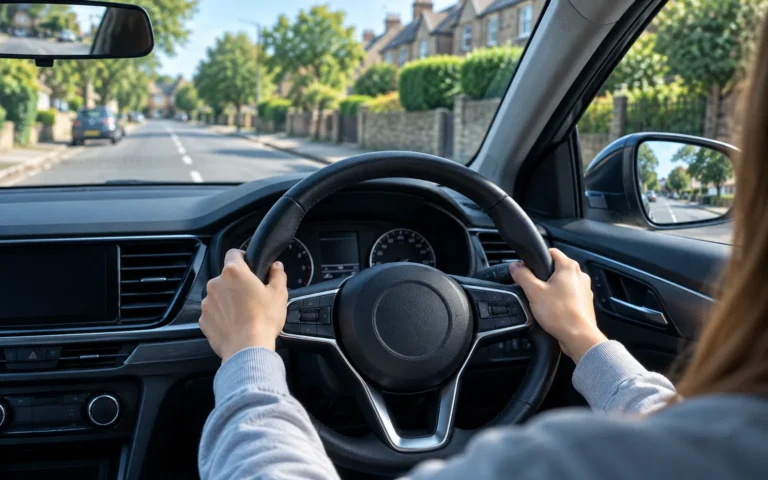
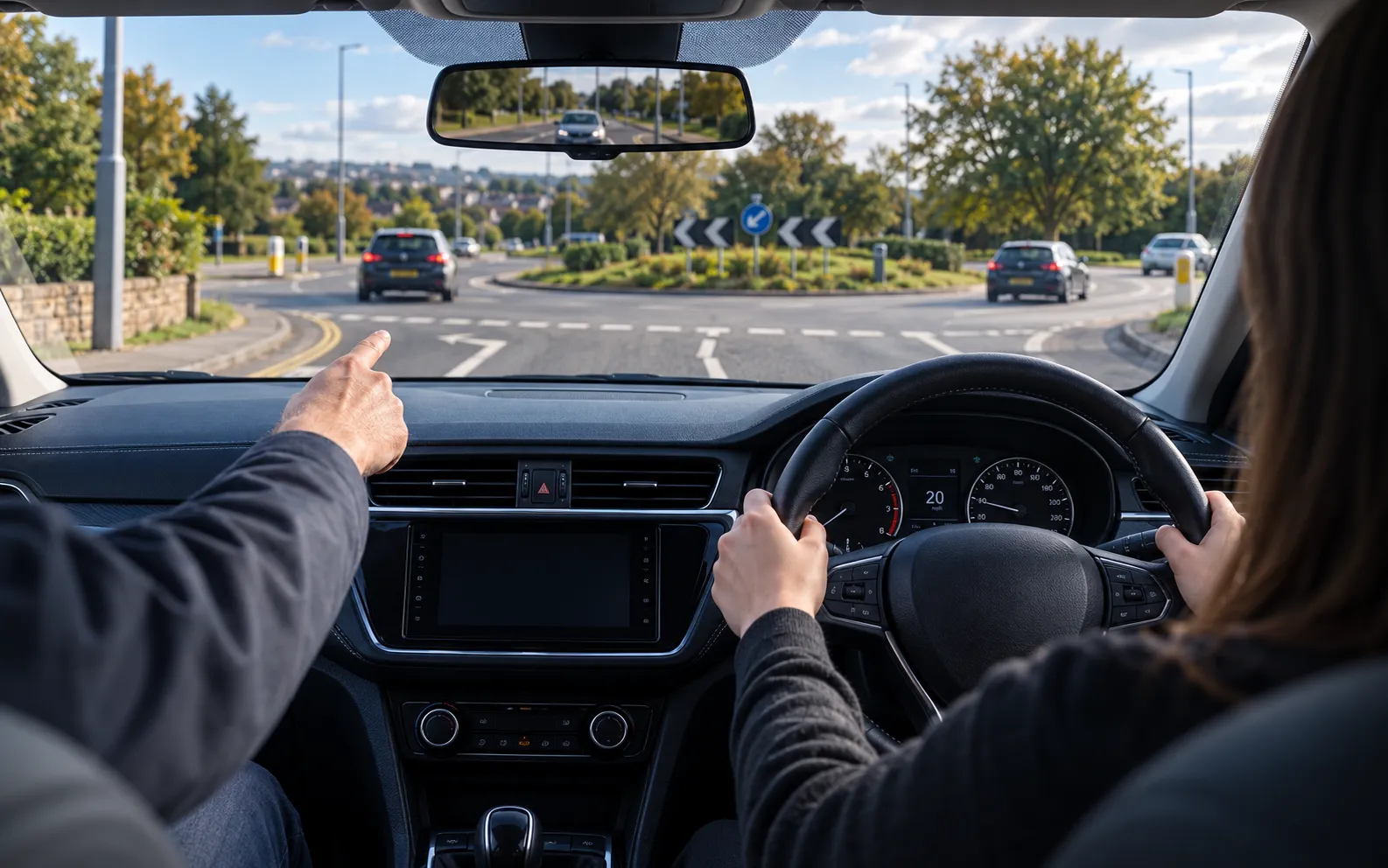
Lessons add up quickly, so when Dad says he’ll teach you in his car for free, it’s tempting to say yes and save the money. Which raises the obvious question: do you have to have driving lessons with an instructor at all? Here in the UK, no, you don’t. The law lets you learn with a relative or a friend, as long as you both stick to a few rules. Skipping lessons completely doesn’t always work out cheaper, though. We’re Expert Driver Training, a small school based in Stevenage, so yes, we teach for a living. We’ll still give you the straight version.
What the law actually says
Strip it right back and a learner needs four things. There’s the provisional licence, obviously, and a set of L plates on the front and back (in Wales you’d use D plates). On top of that you’ll want insurance that actually covers a learner, and somebody qualified sitting beside you.
That “someone qualified” is where a lot of people assume it has to be an instructor. An approved driving instructor (ADI) counts, of course. So does a family member or friend who meets the supervisor rules further down this page, and nowhere does the law say that person has to be paid.
So if you’ve been asking yourself do you have to have driving lessons with an instructor, you can cross the legal worry off your list. The catch is in the small print, mostly around who’s allowed to sit next to you and what you can (and can’t) give them for their time.
Who can supervise you if you don’t use an instructor?
The DVSA is pretty specific here. Your supervisor can’t be under 21, and they’ve got to have had their full licence for three years or more. A licence from the EU, Switzerland, Norway, Iceland or Liechtenstein counts the same as a UK one. If they’re currently banned from driving, they’re out, which I’d hope goes without saying.
The rule families tend to miss is about the type of car. Your supervisor has to be licensed for whatever you’re driving. If your mum passed in an automatic, she can’t sit with you in a manual Fiesta, however long she’s been driving.
Then there’s insurance. Practising in someone else’s car? You’ll either go on their policy as a named driver or buy a separate learner policy. In your own car, you need to be the registered keeper with learner cover in your name. Some insurers won’t accept a supervisor under 25, even though the legal minimum is 21, so read the policy wording properly. Getting caught without cover can mean an unlimited fine, up to 8 penalty points and a ban, before you’ve even taken your test.
Your supervisor has rules of their own, too. They can’t hold and use a phone while they’re with you, they can’t be over the drink-drive limit, and they can’t be under the influence of drugs or certain medicines. The full list is on the DVSA rules for supervising a learner page.
If what you really wanted to know was do you have to take driving lessons with an instructor to stay on the right side of the law, that’s your answer. Meet those conditions and you’re fine to practise without one.
Can you pay a friend or family member to teach you?
No, and this one surprises people. A supervisor isn’t allowed to take any payment for helping you learn, and the DVSA spells out that this includes money for petrol. Only approved instructors, and trainee instructors who hold a licence, can legally charge.
So if a mate’s cousin offers “cheap lessons” and there’s no instructor badge on the windscreen, I’d say thanks but no, however good a driver they are.
Things only an approved instructor can do
Motorways, for one. Learners in England, Scotland and Wales can drive on a motorway only with an ADI, in a car fitted with dual controls. Your dad can’t take you up the A1(M) for practice, even if he’s done that run to work for twenty years.
On normal roads the dual controls earn their keep too. Brake a fraction late approaching a queue on Gunnels Wood Road and an instructor can stop the car from their side before it turns into an insurance claim. Mum or Dad can’t. All they’ve got is their voice, and in the first few weeks that voice tends to go up a notch or two.
The other big difference is the test itself. Instructors teach to the standard the examiner marks against, so they’ll usually spot a bad habit early, while it’s still easy to fix. Lots of parents passed twenty or thirty years ago, and a few things they now do without thinking would count as faults on today’s test.
Already passed and nervous about fast roads? Motorway practice after you pass is part of what Pass Plus covers.
Do you need to have driving lessons with an instructor to pass?
Technically, no. The DVSA’s own figures are hard to ignore, though. In their surveys, learners who’d had no lessons before the theory test were 25% more likely to fail the practical first time. They were also 16% more likely to fail the theory test’s multiple-choice part.
Failing once isn’t a disaster, but it does mean another test fee and another wait for a date. Once you’ve settled do you have to have driving lessons with an instructor, I’d ask something more useful. How many lessons will you want before practice at home starts to pay off?
The usual order for learning to drive in the UK
Search how to learn how to drive UK and you’ll find plenty of advice that contradicts itself. For what it’s worth, this is how to start driving in the UK the way the DVSA lays it out.
You’ll need your provisional licence before any of the driving starts. After that, pick an instructor and start reading The Highway Code, then get your lessons going. While those are under way you study for the theory test, and you sit it once your instructor reckons you’re ready. Private practice with family comes in after that, when your instructor says the time is right. The practical test is last of all, and the DVSA suggests booking it only when your instructor agrees you’re ready to pass.
Notice how late the family practice comes? If you’re starting from nothing, I’d book a handful of beginner driving lessons first and save the drives with Mum or Dad until you’ve got the basics.
Mixing lessons with private practice
Most learners end up doing both, and that’s what we’d suggest too. Your instructor teaches a skill properly, then a parent or friend helps you repeat it until it feels normal. The DVSA backs this up. It says combining the two builds experience faster, and more driving before the test means you’re likely to be safer afterwards.
A few tips from our side. Before a weekend drive with family, ask your instructor what’s worth practising; otherwise you can end up spending Sunday afternoon going over the very habit they’ve been trying to iron out all week. Short drives are better to begin with, on roads you’ve already done in lessons. I’d also tell whoever’s supervising how your instructor describes things (mirror, signal, manoeuvre and so on), so the words in both cars match up.
Live in or around Stevenage? Our driving lessons in Stevenage usually start from your front door, which makes them a lot easier to fit around practice with the family.
How to sign up for driving lessons
If you’ve decided an instructor is worth it, working out how to sign up for driving lessons is easier than most people expect. Here’s how to register for driving lessons without any nasty surprises.
- Sort out your provisional licence first, because you’ll need to bring it to lesson one.
- Have a look at the instructor’s badge. A green one on the windscreen means they’re fully qualified, while pink means they’re still a trainee. Both can teach, but it’s good to know which you’re paying for. You can also find an approved instructor on GOV.UK.
- Before any money changes hands, ask them a few things. Will they adjust lessons to the way you learn? Will they tell you how you’re getting on? What happens if you have to pull out of a lesson at short notice?
- Once you’re happy, message them your postcode, say whether you want manual or automatic, and give a rough idea of the days that suit you.
You can check our current lesson prices first if you like, or simply send us your postcode and times and we’ll tell you what’s open.
Frequently asked questions
Do you have to do driving lessons with an instructor?
No, you don’t. Anyone who’s 21 or over and has had a full licence for at least three years can sit in with you, so long as you’re insured as a learner and the L plates are on. Most people still book some lessons, mainly because it gives them a better shot at passing first time.
Can I learn in my parent’s car?
You can, as long as you’re insured on it. That usually means going on their policy as a named driver, or taking out learner insurance of your own. A claim made as a named driver could hit their no claims discount, so have a word with the insurer first.
Can someone with an automatic licence supervise me in a manual car?
Sadly not. Someone who only holds an automatic licence can sit in with you in an automatic and nothing else. For a manual car, you’ll need a supervisor with a manual licence.
My supervisor is 23. Is that a problem?
Legally it’s fine, since the minimum is 21. The snag is usually the insurer. Some set their own age limit of 25 for supervisors, so ring them or check the small print before your first drive.
Instructor, family or both?
So, do you have to have driving lessons with an instructor? No. Get the age, licence, insurance and plates sorted between you, and you can legally practise at home as often as you like. In our view, though, a few proper lessons at the start make that home practice go a lot further, and they improve your odds of passing first time round.
If you’re near Stevenage and want a rough idea of how many lessons you’d need, talk to a local Stevenage driving instructor. Ring us or send a WhatsApp with your postcode and the days you’re usually around, and we’ll come back to you with what’s free.